Speak with us

Colombo rarely gets a full day to itself. Most itineraries treat it as an airport bookend, one night before Sigiriya and one night before the flight home. Given a real day, the city holds together as a route: the old town in the morning, a temple and a lake at midday, a green space by the water for sunset. Here is an order that actually works, and why the order matters more than the list of stops.
Why the order matters
Colombo’s landmarks do not sit next to each other. The old commercial quarter around Pettah and Fort sits toward the north of the centre; Gangaramaya Temple and the diplomatic district sit further south, near Beira Lake; Galle Face Green faces the ocean, a short distance further south again. Visit them out of sequence and you spend the day doubling back through traffic that is genuinely heavy by mid-morning. Visit them in a rough north-to-south line and each stop leads into the next, and the whole day fits into daylight without a single long crawl through the centre twice.
Start earlier than feels necessary. Colombo’s traffic builds steadily from around 8am and stays heavy until the evening, and Pettah in particular is easiest to move through before the market is at full volume. A day that starts by 8am has room for all four stops without rushing the last one; a day that starts at 10am usually loses Galle Face at sunset to traffic instead.
Start in Pettah: the market and the Red Mosque
Pettah is Colombo’s oldest commercial district, and it is loudest early, which is the point of going before the heat and the crowds build. The market runs block after block by trade, textiles, hardware, spices, and it is not a place that slows down at any hour. Colombo Fort Railway Station, the city’s main rail hub, sits at the edge of the district and is worth a look in passing even if you are not catching a train from it.
The Jami Ul-Alfar Mosque, known locally as the Red Mosque for its red and white striped facade, sits inside the market on Second Cross Street. It was completed in 1909 and remains one of the most photographed buildings in the city. It closes to visitors on Fridays and during prayer times through the rest of the week, so check before building it into a Friday route. Dress modestly and expect to remove your shoes at the door.
Gangaramaya Temple and Beira Lake
From Pettah, Gangaramaya Temple sits a short drive south, near Beira Lake. It is one of Colombo’s oldest and largest Buddhist temple complexes, dating to the late 19th century, and it earns the hour most visits take: a monastery, a museum room crowded with donated artefacts and Buddha statues from across Asia, and the Seema Malaka, a lake shrine built on stone pillars over the water and reached by a short walkway. Shoulders and knees covered, shoes off at the door. It is open through the day; give it a full hour rather than a quick look, since the museum room alone has enough in it to slow most visitors down. Keep a little cash on you; the temple and museum both take a small entrance donation and there is no card machine at the door.
A slower stop before the afternoon
Somewhere in the middle of the day, Colombo asks for a pause, and this is where the heat makes the difference between a good day and a tiring one. Independence Square, a landscaped monument and gardens marking the 1948 declaration of independence, is open at all hours with no admission charge, a genuinely quiet stretch between two busier stops and one of the few places in central Colombo with real tree cover. Viharamahadevi Park, the city’s largest, is the family-friendlier alternative if you are travelling with children, with more open lawn and shade to sit out the hottest part of the afternoon.
Galle Face Green at sunset
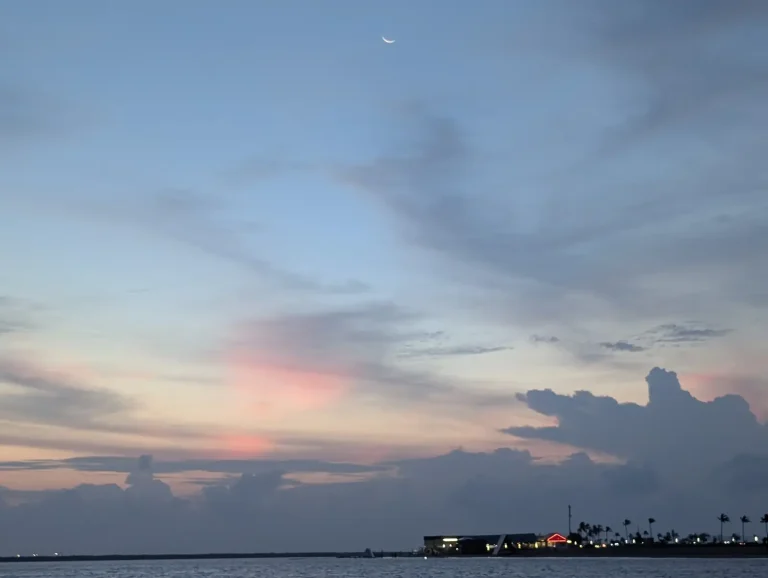
End on the water. Galle Face Green is a half-kilometre stretch of open promenade between the Indian Ocean and Galle Road, originally cleared by the Dutch for their fort’s cannons and turned into a public green by the 1850s. It fills up from around four in the afternoon and stays busy into the evening, kite flyers, families, and street food stalls selling isso wade and kottu. There is no entry fee, and it is the natural place to close a day out rather than the place to start one; the light and the crowd both build toward evening, not away from it.
What one day leaves out
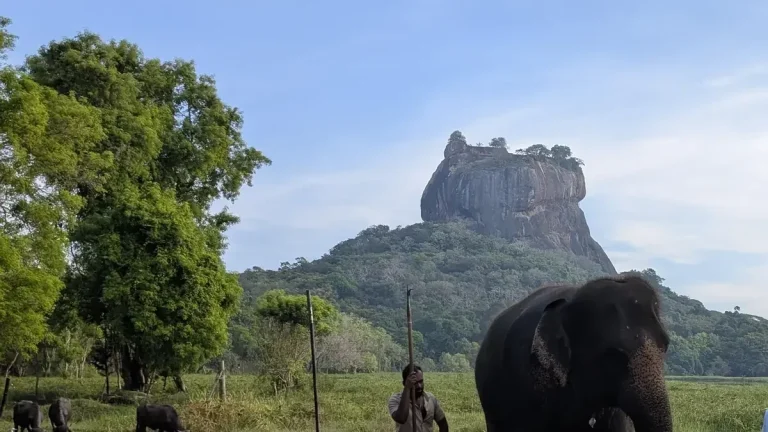
Four stops is a full day once Colombo traffic between each is accounted for. The National Museum, the Lotus Tower observation deck, and Kelaniya Raja Maha Vihara further out of the centre are all worth a visit, but they genuinely need a second day or a swap with one of the four stops above rather than an addition on top of them. If Colombo is one stop on a longer trip, our guide to how many days you need in Sri Lanka covers how much time the rest of the country actually needs, and many visitors pair a day like this one with a Sigiriya day trip from Colombo before or after, either the day they land or the day before they fly out.
Doing it as a private day
The route above works by tuk tuk, car or a mix of walking and hired transport – the constraint is traffic and heat, not distance. Essencylon runs it as a private Colombo City Tour, three to four hours by tuk tuk from $80 for one person plus $20 for each additional traveller, with kei, sedan, SUV, van and bus options at each step above that if you would rather not ride open-air. Message us on WhatsApp with your dates and group size for a quote: +94 77 086 0671.
Frequently asked questions
Can you actually see Colombo in one day?
Realistically, four main stops, a market and mosque, a temple, a park or square, and the seafront, cover the parts of the city most visitors actually want to see. Trying to add more turns the day into a rushed list rather than a route that holds together.
Is the Red Mosque open every day?
No. It closes to visitors on Fridays and during prayer times through the rest of the week, so check before planning it into a Friday itinerary.
What should I wear to Gangaramaya Temple?
Shoulders and knees covered, and shoes off before entering, the same dress code that applies at any Buddhist temple in Sri Lanka.
Is Galle Face Green free?
Yes. It is open to the public at any hour with no entry fee; the only cost is whatever you buy from the food stalls along the promenade.
Car, tuk tuk or on foot?
Pettah and the mosque are best walked once you are there, since the streets are narrow and a vehicle slows you down more than it helps. Between the four stops, a tuk tuk or car makes more sense than walking; Colombo’s landmarks are close together on a map but far enough apart on foot, in the heat, to eat into the day.
Is this a good day to do straight off a flight?
It works landing early morning, since Bandaranaike International sits north of the city and Pettah is the closest of the four stops to that route in. It is a harder day after a late-night arrival with no sleep; a morning flight followed by a rest at the hotel and an afternoon start covering Gangaramaya, the square and Galle Face is the more realistic version.