Speak with us
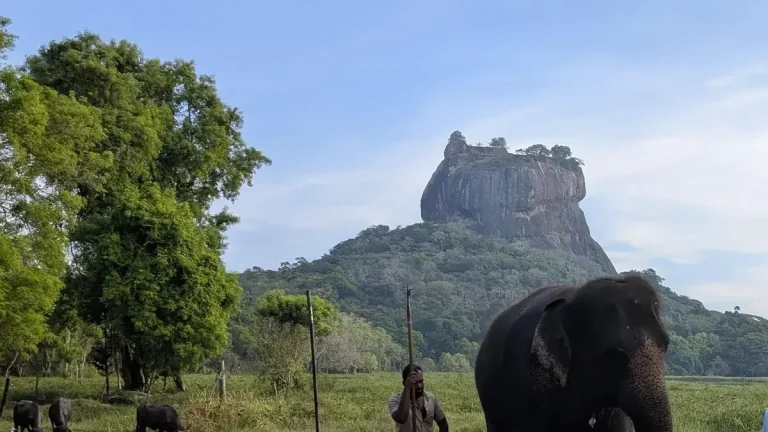
Two rocks stand a mile and a half apart in the middle of Sri Lanka’s dry zone. One costs thirty-five US dollars to climb. The other costs about a dollar’s worth of rupees, handed over at a temple gate. Travellers ask us which one to do almost every week, usually the night before, from a hotel room in Colombo.
Here is the honest answer, including the part nobody selling a tour tends to mention: which one to skip, when doing both is realistic, and when it simply is not.
The short answer
- You want the archaeology – the fifth-century palace, the frescoes, the lion’s paws: climb Sigiriya. There is no substitute for it, and the ticket price does not change that.
- You want the famous view and a bit of adventure: climb Pidurangala. The photograph you have seen of Sigiriya rising out of the jungle was taken from Pidurangala. You cannot take that picture from Sigiriya, because you are standing on it.
- You have one morning and reasonable knees: do both. Pidurangala first, in the dark, then Sigiriya when the gates open.
- You are driving up from Colombo for the day: one rock, not two. The arithmetic is further down, and it is not close.
What the Sigiriya ticket actually buys
Sigiriya is a UNESCO World Heritage site and the ticket is priced accordingly. At the time of writing a non-SAARC adult pays US$35, a SAARC adult or a foreign child pays US$20, and the museum at the base is included. You pay in rupees at the counter, at the day’s rate. The price has moved more than once in recent years, so treat any figure you read online, this one included, as a guide and check the Central Cultural Fund price on the day.
Two things about that ticket catch people out. It is single entry – you cannot climb, go for lunch, and come back on it. And if you buy online, you still collect the physical ticket at the counter, so it does not save you the queue.
What you get: water gardens and boulder gardens at the base, the fresco gallery on the rock face reached by a spiral staircase, the mirror wall with graffiti scratched into it by visitors more than a thousand years ago, the enormous brick lion’s paws, and the foundations of Kashyapa’s palace on the summit with the plain running flat to the horizon in every direction. The step count usually quoted is around 1,200. Most reasonably fit people are up in 30 to 45 minutes and down in a little less, and two to three hours covers the site without rushing.
What the Pidurangala donation buys
Pidurangala is a working Buddhist monastery, and the fee – reported between LKR 500 and LKR 1,000, cash only, so bring small notes – is a donation at the temple gate rather than a heritage ticket. The office opens at 5am, which is the whole point of it.
The path starts as stairs through the monastery, passes a long reclining Buddha built up in brick, and then stops being a path. The last ten or fifteen minutes are a genuine scramble – hands on granite, one narrow gap where people pass single file, a few boulders you pull yourself over. It is not technical and it is not exposed. It is also not a staircase.
The reward is a 199-metre summit with a flat top big enough for a crowd to spread out on, looking straight across at Sigiriya. Twenty to forty-five minutes up, depending on fitness and how dark it is.
Because the route runs through temple ground, shoulders and knees must be covered, men included. Sarongs are lent at the gate but can run out when it is busy, so carry your own if you have one.
Side by side
| Sigiriya | Pidurangala | |
|---|---|---|
| Entry | US$35 non-SAARC adult, US$20 SAARC adult or child | LKR 500-1,000 temple donation, cash |
| Opens | 7am | 5am |
| Up in | 30-45 minutes | 20-45 minutes |
| Terrain | Stairs and handrails, steep and narrow in places | Stairs, then a hands-on boulder scramble |
| You see | Frescoes, mirror wall, lion’s paws, palace ruins, the plain | A 360-degree view with Sigiriya facing you |
| Best at | Gate opening, or after 3.30pm | Sunrise |
| Skip it if | Budget is tight and history is not the draw | You are unsteady on hands and feet, or dislike scrambling |
Doing both in one morning
This works, and it is the best-value morning in the Cultural Triangle, but only if you are already sleeping nearby. A running order that holds up in late August, when the sun comes up around 5.59am:
- 4.45am – leave your guesthouse. Do not walk the approach road in the dark. Wild elephants use it, and that is not brochure colour, it is why every guesthouse arranges a tuk-tuk.
- 5.00am – pay at the Pidurangala gate and start up with a head torch. Hands free matters on the scramble, so a torch beats a phone.
- 5.45am – on the summit before the light comes.
- 6.45am – down. The ruins and the reclining Buddha look like a different place on the way back, when you can see them.
- 7.05am – the Sigiriya counter, ahead of the coaches.
- 7.20am to 9.30am – the climb, while the stairs are still in shade and the frescoes are quiet.
By ten o’clock the rock face has had three hours of direct sun and there is no shade anywhere on the stairs. Between roughly 10am and 3.30pm you climb in heat, in single file, behind tour groups. Everything about a Cultural Triangle morning is easier if you start it in the dark.
If you are coming up from Colombo for the day
Then be realistic. Sigiriya is roughly four hours’ drive from Colombo. To stand on Pidurangala at 5.45am you would be leaving your hotel around half past one in the morning, and climbing both rocks on no sleep before a four-hour drive home. We are not going to pretend that is a good day out.
Two versions do work:
- The day trip. Pickup between 5.30 and 6.30am, on the rock mid-morning, Dambulla in the afternoon, back in Colombo late. One rock done properly, plus the caves. That is the shape of our 1-Day Sigiriya and Dambulla Cultural Tour, and the timings and costs are broken down in our Sigiriya day trip from Colombo guide.
- One night nearby. Drive up in the afternoon, sleep at Sigiriya or Dambulla, take Pidurangala at sunrise and Sigiriya straight after, then the caves on the way south. Two rocks, two UNESCO sites, and nobody driving at 1am.
If you are landing at Colombo airport and heading north the same day, the drive starts from the terminal rather than the city, which shortens it usefully – that is covered in what to expect from a Sri Lanka airport transfer.
What actually goes wrong
- The bees. Sigiriya’s rock face carries colonies of giant honeybees, called wasps or hornets on the signage. You will see boards asking for quiet and wire mesh shelters to duck into. Staff close sections when a swarm is active, occasionally for days. It is not a reason to stay away. It is a reason to keep your voice down on the marked stretch, and to carry your adrenaline pen if you are allergic.
- The monkeys take food, bottles and anything loose on the stairways. Zip the bag.
- Wet granite. At Pidurangala the falls happen on the way down, not the way up, and after rain the boulders are slick. Flip-flops are the wrong footwear for that section.
- No cash. There is no card machine at the Pidurangala gate.
- Assuming re-entry. One Sigiriya ticket, one entry, same day.
Where Dambulla fits
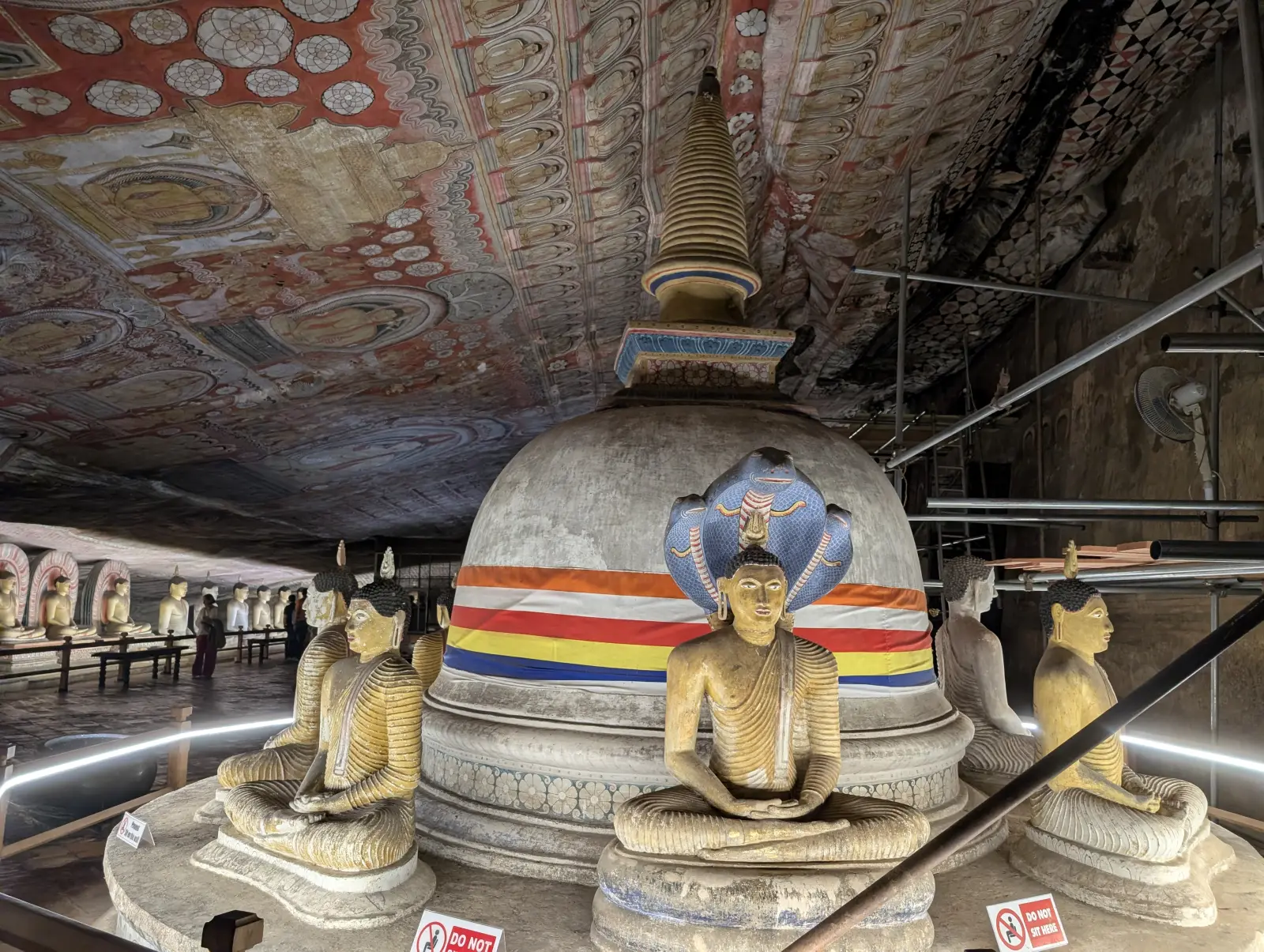
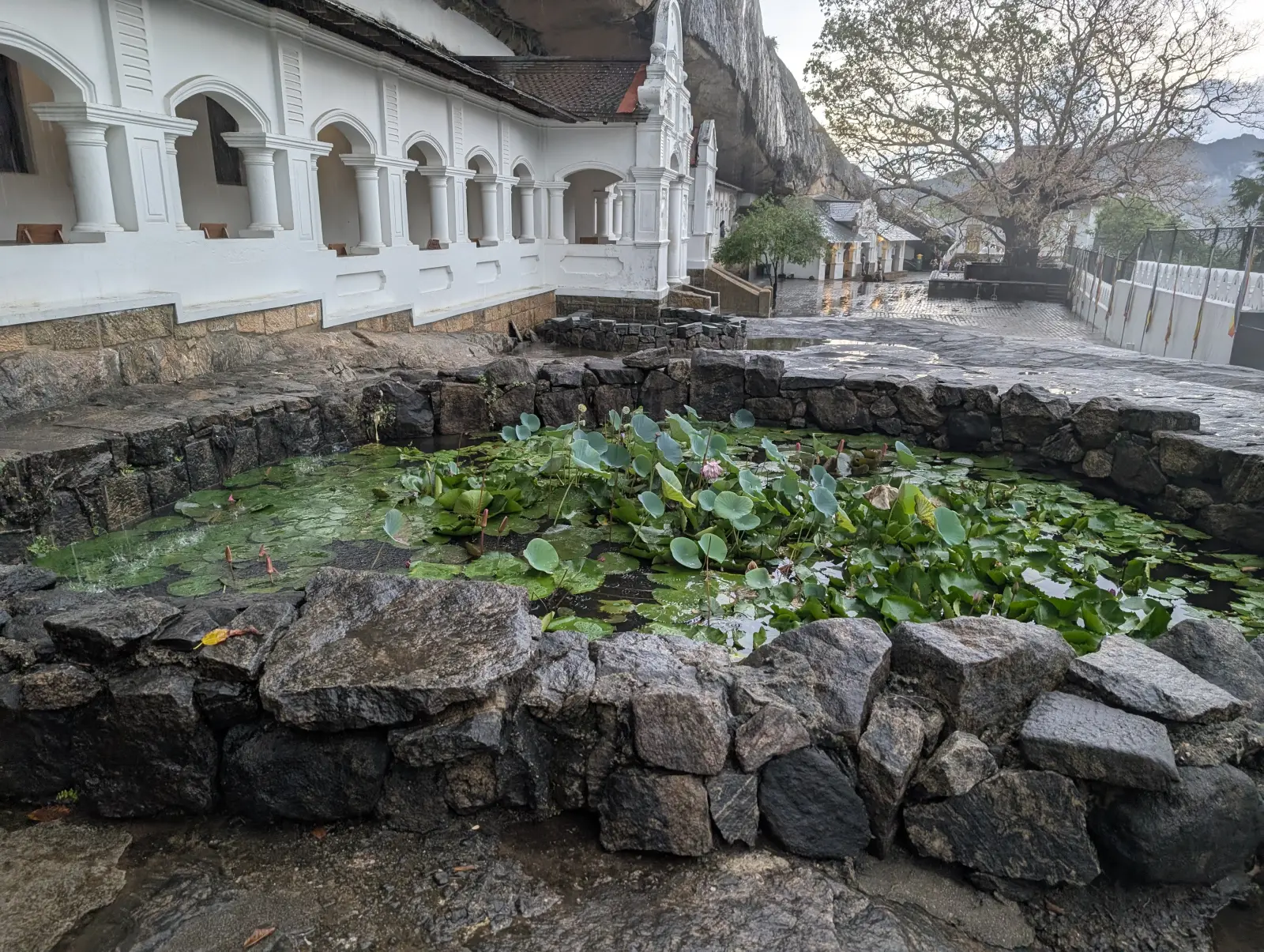
Dambulla sits about half an hour south of Sigiriya, and it is the natural afternoon to a rock morning: five caves cut under an overhang, filled with Buddha statues and painted ceilings, cool and dim when the day outside is at its worst. If you have been climbing since dawn, this is the part of the day where you walk slowly and look up.
Questions we get asked
Is Pidurangala better than Sigiriya?
They are not the same thing. Pidurangala gives you the better photograph and the more enjoyable climb for a fraction of the money. Sigiriya gives you a fifth-century royal city that you walk through. If you can only do one and you came to Sri Lanka for its history, pay the thirty-five dollars.
Can I really climb both in one day?
Yes, and plenty of people do, in that order, in one morning – both finished by half past nine is normal. Doing it from Colombo in a single day is where it stops being sensible.
How hard is the Pidurangala scramble, honestly?
If you can get yourself up onto a table-height rock using your hands, you will be fine. If a hip or a knee objects to that, or you dislike heights on uneven ground, take Sigiriya instead – it has handrails the whole way.
Are the rocks all right for children?
Sigiriya suits most school-age children who are used to walking, with the usual care on the open staircases and a firm hand near the monkeys. Pidurangala’s last section is a scramble in the dark if you go for sunrise, which is a different proposition with a small child.
Do I need a guide?
Not for Pidurangala – it is one path. Sigiriya rewards one, because very little on the site is labelled in any depth. Our founder Priyantha holds an SLTDA Chauffeur Guide Licence (C-1691), and a licensed site guide can be arranged for your day if you want one.
What should be in the bag?
Head torch, more water than you think, shoes with grip, rupees in small notes, something to cover shoulders and knees, and sun cream you put on before 7am rather than at the top.
Planning the day with us
We run the Cultural Triangle as a private day with our own drivers, in a private air-conditioned vehicle, at one price agreed before you book. For one traveller in our smallest vehicle, a Kei car, the day is $150. For two sharing, that is $80 each. A larger group moves up the ladder to a sedan, SUV, van or bus, and we quote that vehicle in full before you book.
Site entry at Sigiriya and Dambulla is paid separately at the gate and is not part of our price. We would rather say that here than have it arrive as a surprise on the day.
If you want the two-rock version, say so and we will build the overnight stop into the plan rather than pretend a day trip covers it. Have a look at the Sigiriya and Dambulla day tour, or send your dates to WhatsApp +94 77 086 0671 and we will come back with one fixed price.